
Selling
What's the Deal With All the Fourplexes Being Built in McAllen?

"Everyone in the chain was making money — the builders, the contractors, the realtors, the lenders, the title companies, even the city. So nobody stopped it."
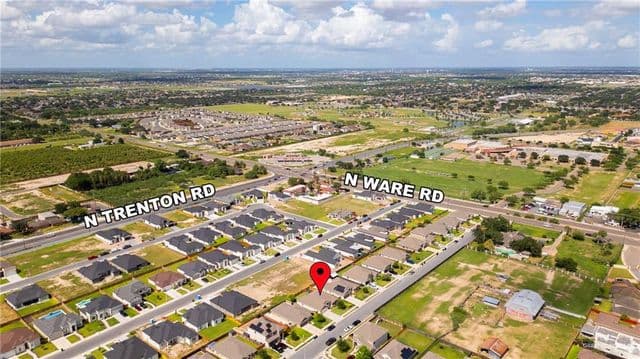
If you've driven through McAllen or Edinburg in the last few years, you've seen it: gated fourplex subdivisions popping up on lots that used to be a single house, or empty land that used to be nothing at all. People ask me about it constantly — "who's buying these?" "why does every new development look the same?" "is this a good investment or a trap?"
I've been on the inside of this cycle as a realtor, watching it happen deal by deal, so let me walk you through what actually happened, why it happened, and where I think it's headed — because a lot of what gets repeated about this market isn't quite the full picture.
How we got here
It started during the early pandemic. Interest rates were at historic lows, and rents in the Valley had climbed high enough that the math on building a fourplex looked incredible on paper. A builder could clear somewhere in the neighborhood of $50,000–$70,000 per fourplex. Contractors were pulling in around $30,000. Realtors were making $10,000–$20,000 on the sale. The city was collecting permit and improvement fees. Lenders were writing the loans. Title companies were closing them.
Everyone in the chain was making money. So everyone kept saying yes.
The problem is that when every single player in a deal profits regardless of whether the end product is actually something people want to live in, nobody has much incentive to slow down and ask that question. Builders and developers — often people with capital who aren't the ones talking to renters — don't get the same read on what tenants actually want that we get as agents. We're the ones fielding the calls. We talk to tenants, to buyers, to lenders. We have our fingers closer to the pulse of what people in this market actually want, and it's not what got built.
The disconnect
Here's what I mean. The developers built "luxury" Class A multifamily — nice finishes, small footprints, no real yard, asking $1,400 a month for a 3-bed/2-bath unit. Meanwhile, you could rent an actual single-family home with a yard for $1,600. That's a $200 gap for a massively better product. It never made sense.
Our renter base in the Valley — and this is especially true for the Hispanic families who make up a large share of long-term tenants here — isn't asking for a luxury apartment experience. They want a backyard. They want a place that's pet-friendly. They want space to grill and host family on weekends. Whether someone's looking for a long-term rental home or an affordable entry point into homeownership, the demand has consistently been for something more modest and more livable than what got built at scale.
Developers largely missed that, because the people financing these projects usually aren't the people negotiating leases or fielding buyer calls every day. That gap between who builds and who actually talks to the end user is, in my opinion, the single biggest reason we're where we are now.
Why the timing makes it worse
Real estate development doesn't turn on a dime. A typical fourplex project timeline looks something like this: 6 months to purchase land, another 6 months to a year for feasibility, roughly a year for construction, and then a sellout period that can run another year before the next phase even starts vertical construction.
That means the inventory hitting the market today was underwritten on sentiment and demand assumptions from two years ago. Developers are always building for a market that no longer exists by the time the product is finished. It's a long-term structural lag, not a one-time mistake — and if you look at the build-year data on fourplexes around Edinburg and McAllen, you can actually see this pattern repeat itself: a wave built between roughly 2005 and 2009, then a dead zone from 2010 through 2015 while the market absorbed the oversupply, and now we're living through the next cycle of that same pattern.
What that's done to pricing
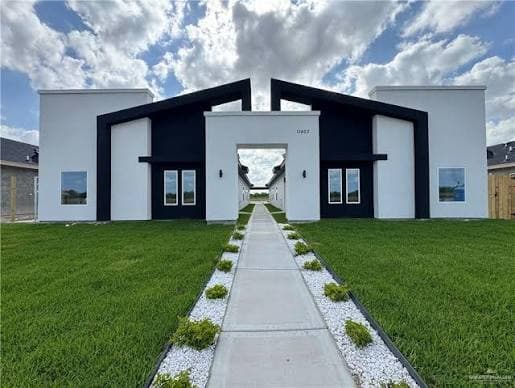 A recently completed fourplex development in McAllen — the "Class A" style of build that priced above what a comparable single-family rental cost, the exact mismatch driving the current oversupply.
We're now sitting on too much inventory relative to real demand, and rents in the Valley are about as soft as they've been in years. I've had developers — people who already own platted, ready-to-build fourplex subdivisions — come to me asking whether they'd be better off replatting those lots as single-family homes instead. That's not a hypothetical. That's a real conversation happening right now among people who put real money in the ground and are reassessing.
Fourplexes that sold for around $550,000 during the peak are now trading closer to $475,000. A lot of realtors and developers won't tell you that plainly, because they're still trying to move product at the old numbers. I'll say it directly: prices have come down, and the shift was predictable if you were paying attention to the fundamentals instead of the momentum. I can say with some pride that I didn't sell a single fourplex above market value during the top of this cycle, because we understood where the pricing was heading.
Just how bad is the oversupply? Here's the actual math
I can tell you rents are soft and prices have come down. But when you pull the live MLS numbers across Hidalgo County, the real picture is worse than most people in this market are willing to say out loud.
Right now, active fourplex inventory is being added to the market faster than it's being sold — and the gap is widening every month.
| Hidalgo County — Fourplexes | Last 30 Days | Last 90 Days |
|---|---|---|
| New listings added | 82 | 198 |
| Fourplexes sold | 32 | 73 |
| Net added to inventory | +50 | +125 |
Total active fourplex listings on the market today: 497.
A healthy, balanced housing market sits at around 6 months of supply. Run the math on what's actually happening in Hidalgo County right now, and fourplexes are sitting at 15.5 to 20.4 months of supply — two to three times what a normal, healthy market looks like, using nothing but this month's actual sales pace.
And that's the picture today. Here's where it goes if nothing changes:
| Today | 6 Months From Now | 12 Months From Now | |
|---|---|---|---|
| Active inventory (status quo) | 497 | ~750–800 | ~1,000–1,100 |
| Months of supply | 15.5–20.4 | 24.9–30.7 | 34.3–41.0 |
At the current pace, it would take the better part of three years just to sell off the fourplex inventory that's sitting active in Hidalgo County today — and every month that passes without a correction, that number gets worse, not better.
This isn't a guess or a gut feeling. This is what happens when everyone in the deal chain keeps building and keeps selling because everyone's still getting paid, while nobody's stopping to ask whether the market can actually absorb what's coming. It's exactly why I didn't sell a single fourplex above market at the peak, and it's exactly why developers who own platted fourplex lots are quietly calling me to ask about replatting them as something else entirely.
Cities are starting to respond
Based on conversations I've had directly with people close to city planning and economic development in the Valley, Weslaco has had a moratorium in place on new fourplex subdivisions for a while now, and there are signs other cities are considering similar moves. I want to be upfront that I haven't seen a public ordinance confirming every detail of this — this is coming from industry conversations, not something I'm citing as a matter of public record — but it lines up with what we're seeing on the ground: cities recognizing there's more fourplex supply than the market can currently absorb.
Where it's headed next
What's happening now is that developers who got used to fourplex-level margins are pivoting to condos and townhomes to chase that same profit, betting on high density as the next play. My honest concern is that we could see the same problem repeat itself. In conversations with people at the Edinburg EDC, P&Z, and other city offices, my read is that we're heading toward a similar cycle: a peak in townhome and garden-home sales, followed by an inevitable oversaturation once supply outpaces real demand again.
If you're an investor trying to make money in this environment, there are really only two paths that work. Either you time this trend with real precision and get ahead of whatever comes after the townhome cycle, or you stick to long-term, sustainable financial models that hold up regardless of which product type is currently in fashion. There's still real opportunity in fourplexes in the low $400s to under $500K if you're building or buying for the long term and not chasing the peak — the fundamentals of this market do stabilize eventually, they just take longer than most people underwriting these deals are willing to admit.
What actually comes after the townhome and garden-home cycle is a good question, and one I think deserves its own conversation.
Daniel Santos
Daniel Santos is a REALTOR® with Revive Real Estate Team, serving buyers and sellers throughout the Rio Grande Valley.